Understanding the economic landscape
Welcome to TrumpNewsInternational's economy page, your premier source for insightful analysis and up-to-the-minute coverage of the financial world. Here, we delve into the intricacies of the stock exchange, government policies, international trade, and taxation, providing business professionals with the knowledge they need to stay ahead.


AI Becomes a New Campaign Tool as More Voters Turn to Chatbots for Election Research
As the 2026 U.S. midterm elections approach, artificial intelligence is becoming an increasingly common source of political information for American voters. AI assistants including ChatGPT, Claude, Gemini, and other large language models are being used to summarize candidate positions, explain ballot initiatives, and compare campaign platforms—making this election cycle one of the first in which generative AI has become a meaningful part of voter research.
The trend reflects broader adoption of AI across daily life, but it has also prompted renewed debate among researchers, technology companies, and election experts over the accuracy, neutrality, and transparency of AI-generated political information.
A recent report by The New York Times highlighted several examples of voters relying on AI to navigate lengthy ballots and complex local races. One California voter used Anthropic's Claude to locate progressive voter guides and explain municipal races after initially receiving a refusal to provide direct voting advice. Another voter in Georgia asked ChatGPT to identify candidates whose voting records aligned with libertarian principles, using the chatbot as a starting point before making a final decision.
Researchers say the appeal of AI lies in its ability to provide conversational answers that summarize large amounts of information more quickly than traditional search engines. Rather than reading multiple campaign websites, news reports, and voter guides, users can ask follow-up questions and receive responses tailored to their specific concerns.
However, election scholars caution that AI should supplement—not replace—independent research.
Large language models can generate inaccurate information, omit important context, or present uncertain conclusions with unwarranted confidence, a phenomenon researchers often describe as "hallucination." Even when factual, AI-generated summaries may simplify complex policy debates or fail to reflect the full range of perspectives surrounding a candidate or ballot measure.
Political scientist Yamil Velez of Columbia University has argued that AI systems designed specifically for elections should rely on verified and curated databases rather than broadly scraping information from across the internet. Such an approach, researchers say, could reduce factual errors and improve transparency.
Questions surrounding political neutrality remain an active area of academic research.
Several independent studies have found that AI systems can exhibit measurable political biases under certain prompts or evaluation methods. At the same time, other researchers have noted that results vary significantly depending on the model tested, the methodology used, and how questions are framed. Because AI models are probabilistic language systems trained on vast datasets, they may reflect patterns present in publicly available text rather than intentionally promoting a particular political viewpoint.
Major AI developers have publicly stated that they are working to reduce political bias and improve neutrality.
OpenAI says its models are designed to help users explore political topics without persuading them toward particular viewpoints and encourages users to consult multiple sources when making important decisions.
Anthropic similarly states that Claude should provide balanced, comprehensive responses that help users reach their own conclusions while engaging with differing political perspectives fairly.
Despite those efforts, experts generally recommend that voters verify AI-generated information using official election websites, candidate statements, reputable news organizations, and nonpartisan voter guides before casting a ballot.
Campaigns themselves are also adapting to the rise of AI. Political consultants increasingly publish policy positions in structured formats that are easier for AI systems to summarize accurately. As generative AI becomes more integrated into search engines and digital assistants, election analysts expect campaigns to optimize content not only for traditional search engines but also for AI-powered information tools.
Whether AI ultimately improves civic engagement or contributes to misinformation remains an open question. What is clear is that generative AI is rapidly becoming another source of political information for millions of voters, placing increased importance on transparency, source verification, and digital literacy during future election cycles.

AI Spending Comes Under Investor Scrutiny as Big Tech Faces Market Pressure
The world's largest technology companies are facing renewed investor scrutiny as markets weigh the enormous cost of building the infrastructure needed to support the next generation of artificial intelligence.
Companies including Microsoft, Nvidia, Alphabet, Apple, Meta, Amazon, and Tesla have collectively invested hundreds of billions of dollars in AI-related projects over the past two years, funding advanced semiconductor purchases, expanding cloud infrastructure, and constructing massive data centers to support increasingly sophisticated AI models.
While many investors continue to view artificial intelligence as the technology sector's most significant long-term growth opportunity, recent market volatility has highlighted growing concerns about the pace of spending and the timeline for generating meaningful returns.
Analysts say investors are increasingly focused on whether AI investments will translate into stronger revenue growth, higher margins, and sustained demand for enterprise AI products. As quarterly earnings approach, Wall Street is expected to closely examine capital expenditure levels, cloud computing growth, AI-related revenue, and management guidance for the remainder of the year.
Dan Ives, managing director at Wedbush Securities, recently described the current period as an important test for the technology sector, saying investors are looking for evidence that the industry's unprecedented AI investment cycle is beginning to produce measurable financial results.
The pressure comes as technology companies continue expanding AI infrastructure at a rapid pace. Major cloud providers—including Microsoft, Amazon, and Alphabet—have committed tens of billions of dollars annually toward new data centers, networking equipment, and specialized AI processors. Meta has also significantly increased capital spending to expand its AI capabilities across consumer products and advertising platforms.
The extraordinary level of investment has prompted questions from some investors about whether current spending levels can be sustained if enterprise AI adoption develops more slowly than expected.
Despite those concerns, many analysts remain optimistic about the sector's long-term outlook.
Recent earnings from semiconductor manufacturer Micron Technology pointed to continued strength in demand for high-bandwidth memory, a critical component used in AI servers. The results reinforced expectations that demand for AI hardware remains robust as cloud providers continue expanding computing capacity.
Analysts at UBS have also argued that supply constraints across portions of the AI hardware ecosystem suggest demand continues to outpace available capacity. The firm expects cloud revenue growth and enterprise AI adoption to remain important drivers of earnings over the coming quarters, while emphasizing the importance of maintaining diversified investment portfolios.
Market strategists note that the AI investment cycle differs from previous technology booms because of its scale. Rather than focusing solely on software development, companies are simultaneously investing in semiconductors, networking equipment, power infrastructure, and data centers, making artificial intelligence one of the most capital-intensive technology transitions in decades.
Whether those investments ultimately generate returns sufficient to justify their cost remains one of the central questions facing investors. The upcoming earnings season is expected to provide a clearer picture of how quickly AI products are contributing to revenue growth and whether companies can maintain current spending without eroding profitability.
For now, Wall Street appears to remain optimistic about AI's long-term potential while becoming increasingly selective about which companies are best positioned to convert massive infrastructure investments into sustainable financial performance.
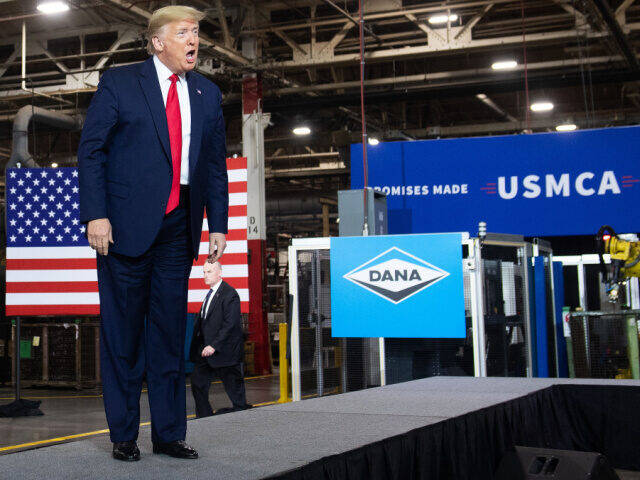
U.S. Declines to Renew USMCA During Scheduled Review, Opening Door to Further Trade Talks
The United States has declined to renew the United States-Mexico-Canada Agreement (USMCA) in its current form during the trade pact's scheduled six-year joint review, setting the stage for additional negotiations with America's two largest trading partners while leaving the agreement in force.
In a statement released following the review, U.S. Trade Representative Jamieson Greer said the United States, Mexico, and Canada met on July 1 as required under the agreement to evaluate the implementation and future of the trade pact.
Greer said the United States did not agree to renew the agreement in its current form, citing concerns over unresolved issues and trade imbalances. He added that the administration intends to continue negotiations with both Canada and Mexico to address those concerns.
Despite the decision, the USMCA remains in effect. Under the agreement's review process, declining to renew during the six-year review does not immediately terminate the treaty. Instead, the three countries can continue negotiations while the agreement remains operational unless one of the parties formally withdraws.
The Office of the U.S. Trade Representative said additional bilateral discussions with Mexico are expected later this month as officials seek changes to portions of the agreement.
According to a senior administration official, President Donald Trump chose not to endorse an automatic extension of the current agreement, arguing that outstanding trade issues should be addressed before the United States commits to another 16-year renewal period.
Administration officials pointed to persistent U.S. trade deficits with both Canada and Mexico as a key concern, saying the White House wants future negotiations to focus on strengthening domestic manufacturing, improving market access for American producers, and ensuring trading partners fully comply with the agreement's provisions.
The USMCA, which entered into force in 2020, replaced the North American Free Trade Agreement (NAFTA) and governs trade among the United States, Canada, and Mexico. The agreement includes provisions covering digital trade, automotive manufacturing, agriculture, labor standards, intellectual property, and dispute resolution.
Economists and trade analysts will be closely watching upcoming negotiations to determine whether the three countries can reach consensus on potential revisions. Because North America represents one of the world's largest integrated trading blocs, any significant changes to the agreement could have implications for manufacturers, agricultural producers, supply chains, and cross-border investment across the region.
For now, businesses continue operating under the existing USMCA rules while negotiations proceed, with no immediate changes to tariffs or the agreement's core provisions.
Create Your Own Website With Webador